HARDWOOD VS COMPOSITE DECKING
COMPARING COST, DURABILITY, MAINTENANCE, AND APPEARANCE
The right decking material should complement your home, suit your lifestyle, and perform through years of outdoor use. For many homeowners, builders, and architects, the decision comes down to two popular options: hardwood and composite decking.
Hardwoods offer the strength, character, and beauty of a natural product. Composite decking offers manufactured consistency and less work to maintain its color. Both deserve consideration, but their differences become clearer when you look beyond the initial purchase price.
Here’s how hardwood and composite decking compare on cost, durability, maintenance, and appearance.
What is Hardwood Decking?
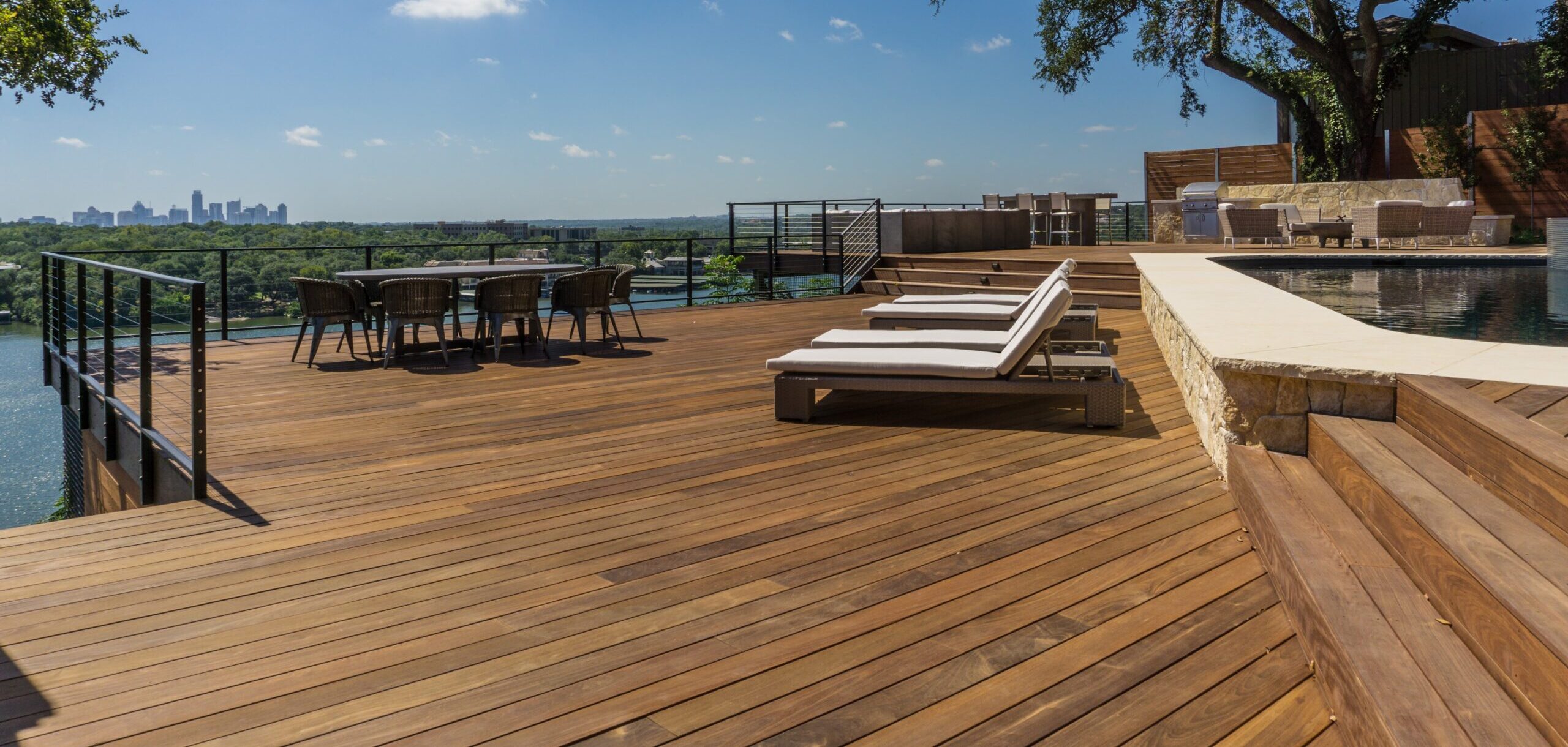
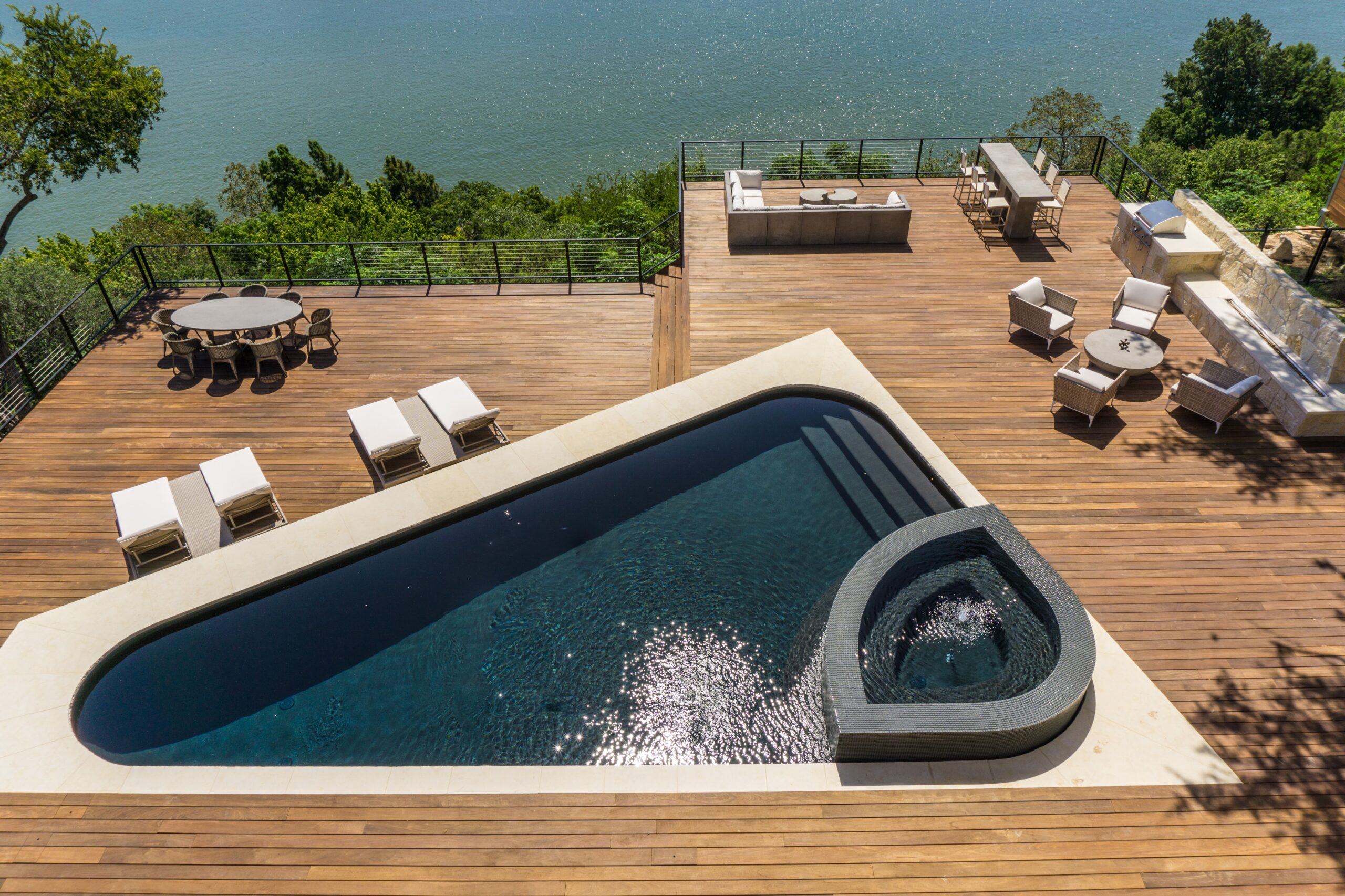
Hardwood decking is solid wood milled from species suitable for outdoor use. Popular options include Ipe, Cumaru, Garapa, and Tigerwood. Each brings its own combination of color, grain, hardness, and durability.
Unlike a printed or embossed wood pattern, every hardwood board has its own character. That variation creates depth across a finished deck and complements architectural styles ranging from traditional coastal homes to contemporary outdoor living spaces.
Species selection matters. Hardwoods differ in their resistance to decay, movement, and wear, so the right choice depends on the application, exposure, and installation details.
What is Composite Decking?
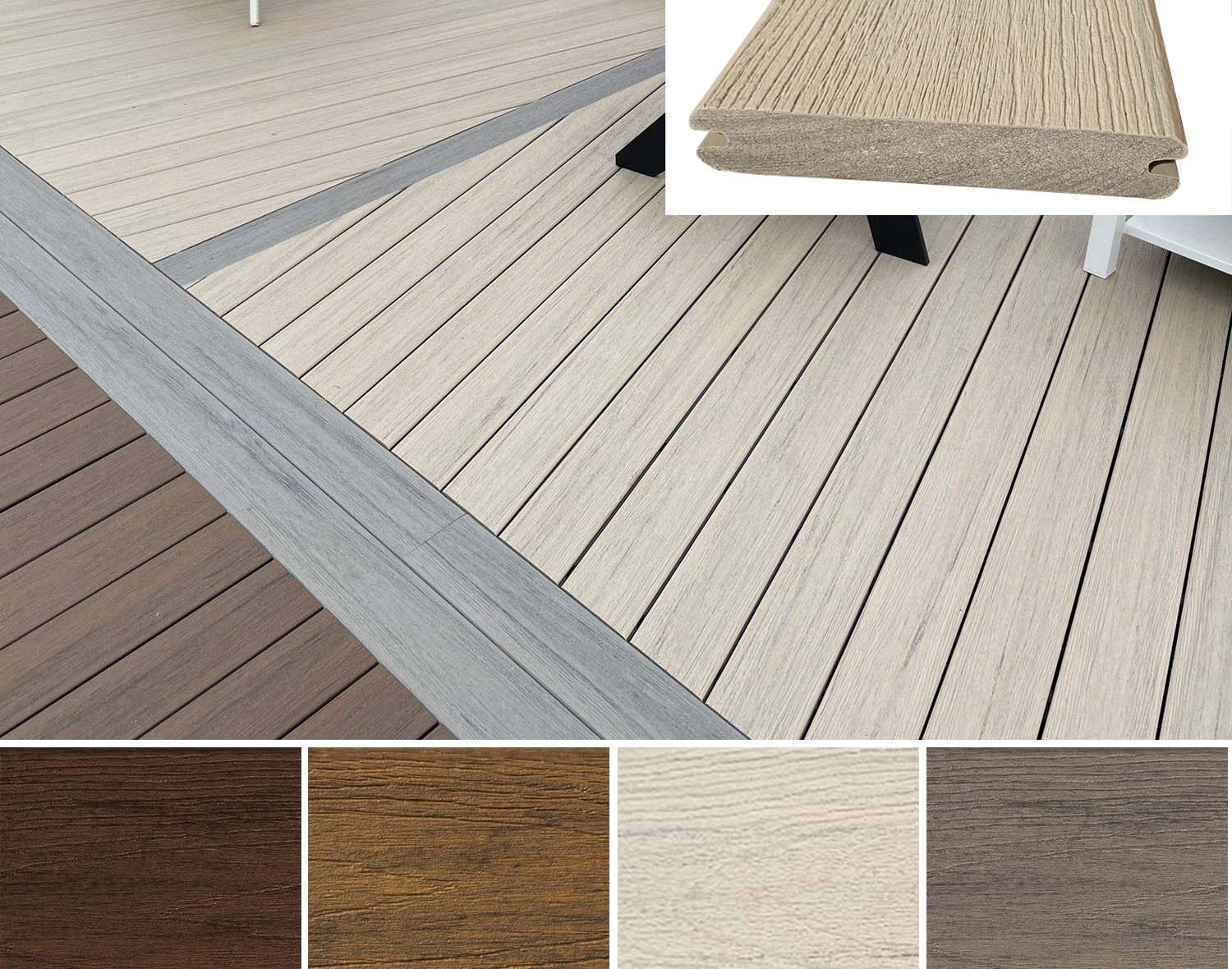
Composite decking generally combines wood fibers with plastic and other additives. Many products feature a protective cap designed to improve stain and fade resistance. PVC decking is a separate category made without wood fibers, although it is often grouped with composite products when people compare decking materials.
Composite boards are available in a wide range of colors, textures, and price levels. Performance varies by manufacturer and product line, making it important to compare specific products rather than treating all composites as equal. Two of the most popular composite decking brands on the market are TimberTech and Trex.
Cost Comparison
While both options have benefits and drawbacks, there are many compelling reasons to choose a hardwood such as Ipe, Cumaru, Garapa, or Tigerwood for your next deck.
Wood is generally quicker and less expensive to install than composite, due to framing. Composite decking requires a 16” on center spacing because it is too weak and flexible to withstand a wider span between joists. Hardwoods allow up to 24” on center spacing, depending on the deck pattern, saving time and money on installation.
The takeaway: Compare complete installed quotes and your preferred maintenance routine. Board price alone does not tell the full story.
Durability & Strength
Hardwood Decking: The dense species most commonly used for hardwood decking offer excellent strength, hardness, and natural resistance to decay and insects. They withstand heavy foot traffic and everyday wear, and surface scratches can easily be sanded and refinished. Hardwood decking lasts 40-50 years, and Ipe can even last up to 75 years once installed! Species such as Ipe, Cumaru, Garapa, and Tigerwood even have the highest performance tier for building materials regarding fire resistance - CLASS-A FIRE RATING!
Composite Decking: Composite offers dependability with minimal upkeep. However, durability & strength vary by product. Scratches and gouges tend to happen more frequently and are difficult to repair. Composite decks are susceptible to flexing and sagging, so proper joist spacing during installation is essential to limit this. Composite decking only has a lifespan of 20-25 years.
Most composite brands carry a Class-C Fire Rating: Provides basic, entry-level fire resistance and allows flames to spread faster than Class-A or Class-B materials...
| FIRE RATING CLASS | FLAME SPREAD INDEX (FSI) | APPLICATIONS/DESCRIPTION |
| Class A | 0-25 | Highest resistance; severe exposure & wildfire zones |
| Class B | 26-75 | Moderate flame spread; standard applications |
| Class C | 76-200 | Basic/light fire resistance; minimum code applications |
Maintenance
Hardwood Decking: The first thing to know about hardwood maintenance is that it only affects color and appearance, not structural performance or durability. There are two options when it comes to hardwood decking maintenance:
- Allow your hardwood decking to naturally fade from its original color to a silver-gray patina...
- Maintain the rich, original color of your hardwood decking...
Option #1 requires little to no maintenance apart from occasional cleaning of leaves, debris, etc.
Option #2 requires regular maintenance, the frequency of which depending on exposure and climate.
| EXPOSURE CONDITIONS | MAINTENANCE FREQUENCY | REQUIRED MAINTENANCE |
| High sun exposure & coastal environments | Every 6-12 months | Cleaning & oiling of deck 1-2 times a year will maintain original color/appearance |
| Partial shade or covered decks | Every 12-24 months | Occasional cleaning & oiling of deck will maintain original color/appearance |
| Fully shaded or low uv areas | As needed | Cleaning & oiling of deck as needed to maintain original color/appearance |
Composite Decking: Composite decking generally requires less upkeep to maintain its manufactured color. Composite decking does require regular cleaning, and its repair options are more limited. Many composite brands cannot be sanded without damaging their protective surface, so deeper damage may require board replacement.
Appearance
The strongest claim composite manufacturers can make about the beauty of their product is that it looks like real wood. At its very best composite wood is an inferior facsimile of true tropical hardwood. Why buy a substitute? There’s no way to truly emulate the natural grain, shade variation, and genuine appearance of actual wood. There is no comparison when it comes to aesthetics. Composite decking will also never feel like natural wood. Even as technology improves the look of composite decking, it will still feel like plastic. Another consideration is heat retention. This is most applicable to decks installed in very warm areas, such as the southern United States. Composite decking heats up approximately 10 degrees warmer than tropical hardwoods, making bare feet on the deck intolerable. Especially for decks intended for families with young children, this is an important detail.
Taking all factors into consideration, tropical hardwoods have the advantage. It will last for decades, decrease installation costs, feel like natural wood, and most importantly, bring a homeowner the pleasure of its beauty for a very long time, serving as the backdrop for many happy memories.